Hospital
The Secret VampireHospital is the principal human medical setting in the story and a threshold between ordinary explanations and supernatural reality. Patients arrive there after violence in the woods, domestic abuse, vampiric attacks, and magical captivity; yet the institution repeatedly struggles to name what has happened. Its wards therefore become places where wounds are treated, evidence is gathered, identities are concealed or exposed, and the boundary between a human patient and a vampire begins to collapse.
Emergency Care and Human Interpretation
The Hospital first becomes central after Vlad attacks Susie in the woods and Callum finds her unconscious, with a weak pulse and a mark around her neck. Callum attempts to save her by biting his own wrist and offering her his blood, but Celeste discovers him beside her sister and suspects that he caused the injury. Damien drives Susie to the Hospital while Celeste waits anxiously, praying and fearing that she may lose another sister after Brianna’s death. Police officers arrive seeking answers because the woods contain little evidence beyond blood, and Celeste tells them that Callum may know more about what is happening. The medical crisis thus produces two competing investigations: the Hospital treats Susie as a critically injured human, while Celeste’s memories of a fanged figure suggest a supernatural attack.
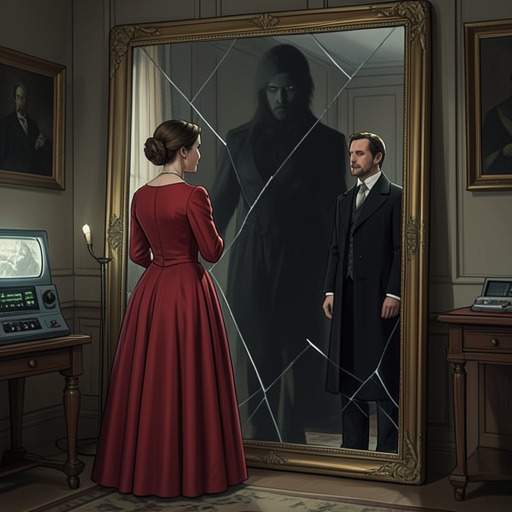
The doctors cannot immediately stabilize Susie. When Celeste wakes from a nightmare in which Callum appears as the monster attacking her, she asks about her sister and is told that Susie remains in critical condition. The phrase places Susie’s transformation within the language of emergency medicine, but the subsequent events expose the limits of that language. After Susie awakens, she removes the bandage from her neck and sees the bite mark; her reflection fades in and out, and she screams in confusion. A nurse summons the doctor, who sedates her, while the wound is described as evidence that a wild beast tried to kill her. The Hospital can identify trauma and respond with sedation, but it cannot yet recognize vampirism as the cause.
The Ward as a Site of Transformation
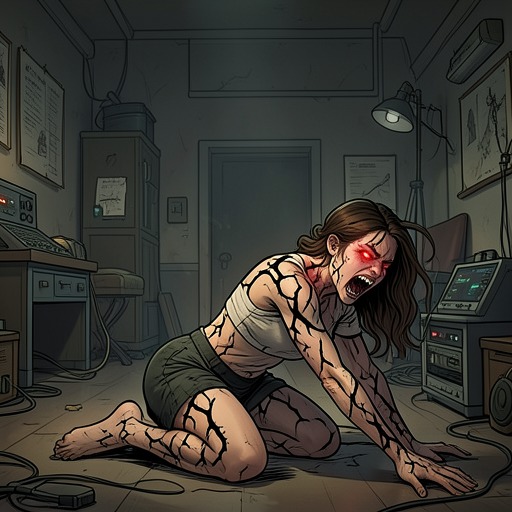
Susie’s body changes within the Hospital’s controlled environment. She follows a strong smell to a small blood bank, summons the man handling the blood, leaps over the counter, seizes a blood bag, opens it, and licks it until her hunger is satisfied. She then becomes weak and collapses, prompting nurses to return her to her room and the doctor to call Celeste. The blood bank makes the transformation concrete: Susie’s new condition is not merely a mark on her neck or an unexplained reflection but a physical hunger that redirects her toward blood.
When Celeste rushes back, she finds Susie’s bed empty and a nurse unconscious in the corner with a bite mark on her neck. The nurse opens red eyes and hisses at Celeste, who uses the wooden stake Isabelle gave her and drives it into the nurse’s heart. The nurse turns to dust, and Celeste apologizes as she wipes away a tear. This encounter reverses the Hospital’s earlier interpretation of Susie’s wound. What had been classified as a wild-beast attack now reveals a contagious or predatory supernatural danger inside the medical institution itself, while Celeste is forced to act as both frightened sister and decisive defender.
The Hospital cannot contain the consequences. Celeste hears that Susie has been ripping apart and killing people, rejects the description of her sister as a blood-sucking monster, and vows to find her. Susie is eventually located elsewhere by Callum, who identifies himself as a vampire and tries to teach her to control the urge to feed because public killings place all vampires at risk. The Hospital therefore marks the point at which Susie’s hidden condition becomes undeniable, even though its staff continue to understand the evidence through human categories of attack, sedation, and critical illness.
Hospitalization, Trauma, and the Limits of Rescue
The Hospital also receives Celeste after the violence surrounding Carmilla’s death. Found unconscious in the woods by a child and brought in by doctors, Celeste wakes to find Damien beside her, while Callum refuses even to hear that she has been injured. Her physical recovery is inseparable from the accusation directed against her: Callum believes that Celeste caused his mother’s death, and Celeste is left to grieve both the loss of Carmilla’s trust and the collapse of her relationship with Callum. Susie’s arrival at the ward intensifies this crisis. She apologizes for killing Carmilla but then rejects her human identity, declaring that she will embrace her darker vampire side and search for Brianna’s killer. Within the Hospital, bodily injury, bereavement, guilt, and supernatural transformation are treated as overlapping emergencies rather than separate conditions.
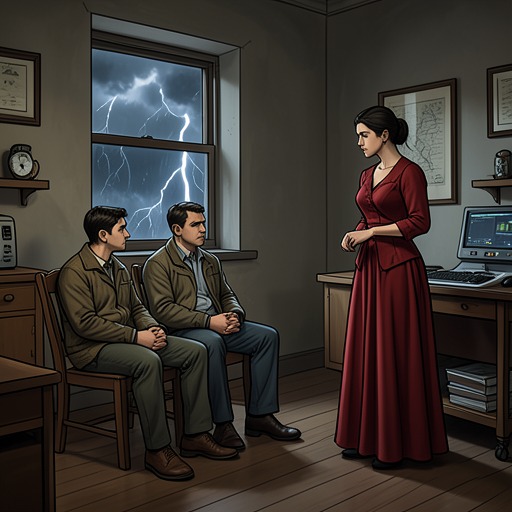
The Hospital later becomes a temporary refuge after Gabriel and Damien rescue Celeste from Samara’s basement. Damien carries her from the Witch's Hut to medical care, and Callum orders that she be taken to the Hospital after finding her weak and traumatized. Celeste’s distress continues through a dream in which Samara kills Amanda and Carmilla appears to tell her that she is special and has a gift. While Gabriel holds her hand and urges her to wake, Damien summons the doctor, who describes her condition as trauma and predicts recovery. The doctor’s assessment provides a humane but incomplete account: Celeste’s mind and body are visibly affected by captivity, yet the dream also becomes a channel for supernatural knowledge about her power and her bond with Callum.
Across these episodes, the Hospital operates as a place of witnessing. Celeste waits beside critical patients, doctors and nurses document marks and altered behavior, police seek explanations, and friends such as Damien repeatedly provide the care that the institution cannot supply by itself. Its authority is strongest when treating immediate consequences—unconsciousness, bleeding, sedation, exhaustion, and psychological shock—but weakest when the cause lies beyond ordinary medicine. The contrast gives the location its narrative force: the Hospital protects life at the threshold of the unknown, even as vampirism, magic, and grief continually exceed the categories available to its staff.
Aftermath and Narrative Significance
The Hospital’s final function is to register recovery without resolving the forces that caused the injury. After the rescue from Samara’s basement, the doctor examines Celeste and states that she is traumatized but will recover, a measured prognosis that contrasts with the wider crisis still unfolding around her. Her discharge does not restore ordinary safety: she remains entangled in Samara’s captivity plot, Callum’s anger, Susie’s vampirism, and the deaths of Amanda and Carmilla. Later, after Celeste uses her supernatural power to expose Samara’s confession and trap her in the magic hourglass, the doctor again examines Celeste and says that she will be well but needs rest. The Hospital thus provides a recurring interval of stabilization rather than a final cure, returning wounded characters to a conflict whose emotional and supernatural causes remain active.